















Collection: Synthesizers

-
 In storeMoog
Messenger Monophonic Analog Keyboard Synthesizer
Regular price $999.00Regular priceUnit price per$999.00Sale price $999.00 -
 In storeMoog
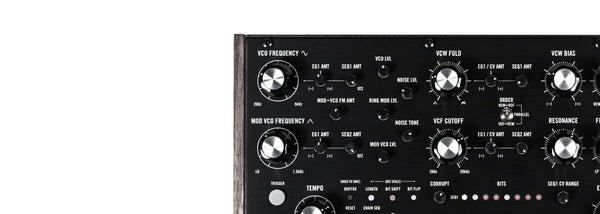
Mother-32 Modular Tabletop/Eurorack Synthesizer
Regular price $899.00Regular priceUnit price per$899.00Sale price $899.00 -
 In storeMoog
Dfam Drummer From Another Mother Analog Percussion Synthesizer
Regular price $899.00Regular priceUnit price per$899.00Sale price $899.00 -
 In storeMoog
Subharmonicon Polyrhythmic Analog Synthesizer
Regular price $899.00Regular priceUnit price per$899.00Sale price $899.00 -
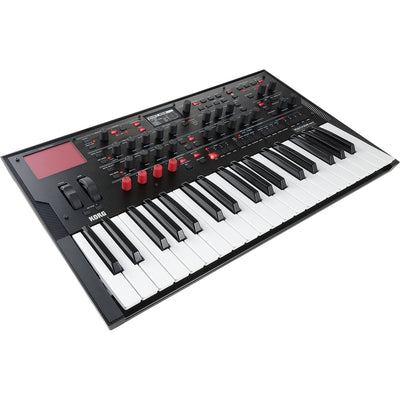 Ready to shipKorg
Modwave MkII Wavetable Synthesizer
Regular price $999.99Regular priceUnit price per$999.99Sale price $999.99 -
 Ready to shipRoland
FANTOM-06 61-Key Synthesizer Workstation
Regular price $2,299.99Regular priceUnit price per$2,299.99Sale price $2,299.99 -
 Roland
S-1 AIRA Compact Tweak Synthesizer
Regular price $289.99Regular priceUnit price per -
 Ready to shipArturia
MiniFreak Vocoder Edition
Regular price $899.99Regular priceUnit price per$899.99Sale price $899.99 -
 In storeKorg
Volca FM 2 Digital FM Synthesizer
Regular price $251.99Regular priceUnit price per$251.99Sale price $251.99 -
 In storeKorg
Volca Keys Analog Loop Synthesizer
Regular price $222.99Regular priceUnit price per$222.99Sale price $222.99 -
 In storeWaldorf
Protein 8-Voice Wavetable Synthesizer
Regular price $549.99Regular priceUnit price per$549.99Sale price $549.99 -
 Ready to shipRoland
V-STAGE 88 Performance Keyboard
Regular price $5,699.99Regular priceUnit price per$5,699.99Sale price $5,699.99 -
 In storeArturia
MiniFreak Polyphonic Hybrid Synthesizer
Regular price $899.99Regular priceUnit price per$899.99Sale price $899.99 -
 In storeArturia
MiniFreak Polyphonic Hybrid Synthesizer (Open Box, Brand New)
Regular price $854.99Regular priceUnit price per$899.99Sale price $854.99 -
 In storeKorg
MicroKORG 2 Synthesizer/Vocoder
Regular price $849.99Regular priceUnit price per$849.99Sale price $849.99 -
 In storeKorg
MicroKORG 2 Synthesizer/Vocoder (Open Box)
Regular price $722.49Regular priceUnit price per$849.99Sale price $722.49 -
 Ready to shipMoog
Grandmother Semi-Modular Analog Synthesizer
Regular price $1,499.00Regular priceUnit price per$1,499.00Sale price $1,499.00 -
 In storeMoog
Grandmother Semi-Modular Analog Synthesizer (Open Box, Brand New)
Regular price $1,469.02Regular priceUnit price per$1,499.00Sale price $1,469.02 -
 In storeMoog
Messenger Monophonic Analog Keyboard Synthesizer (Open Box, Brand New)
Regular price $949.00Regular priceUnit price per$999.00Sale price $949.00 -
 In storeMoog
Dfam Drummer From Another Mother Analog Percussion Synthesizer (Open Box, Brand New)
Regular price $726.53Regular priceUnit price per$899.00Sale price $726.53 -
 In storeMoog
Matriarch 4-Note Paraphonic Analog Synthesizer
Regular price $2,799.00Regular priceUnit price per$2,799.00Sale price $2,799.00 -
 In storeMoog
Mother-32 Modular Tabletop/Eurorack Synthesizer (Open Box, Brand New)
Regular price $726.53Regular priceUnit price per$899.00Sale price $726.53 -
 In storeRoland
JUNO-X 61-Key Polyphonic Synthesizer
Regular price $2,799.99Regular priceUnit price per$2,799.99Sale price $2,799.99 -
 In storeRoland
JUNO-X 61-Key Polyphonic Synthesizer (Open Box, Brand New)
Regular price $2,519.99Regular priceUnit price per$2,799.99Sale price $2,519.99 -
 In storeMoog
Minitaur Analog Bass Synthesizer (Black)
Regular price $899.00Regular priceUnit price per -
 In storeMoog
Minitaur Analog Bass Synthesizer (Black) (Open Box, Brand New)
Regular price $854.05Regular priceUnit price per$899.00Sale price $854.05 -
 Roland
J-6 AIRA Compact Chord Synthesizer
Regular price $289.99Regular priceUnit price per$289.99Sale price $289.99 -
 In storePioneer DJ
Toraiz AS-1 (Showroom)
Regular price $662.22Regular priceUnit price per$849.00Sale price $662.22 -
 In storeWaldorf
Blofeld Keyboard Synthesizer (White)
Regular price $1,699.99Regular priceUnit price per$1,699.99Sale price $1,699.99 -
 In storeWaldorf
Blofeld Keyboard Synthesizer (White) (Open Box, Brand New)
Regular price $1,359.99Regular priceUnit price per$1,699.99Sale price $1,359.99 -
 In storeWaldorf
Streichfett Polyphonic String Synthesizer
Regular price $649.99Regular priceUnit price per$649.99Sale price $649.99 -
 Ready to shipArturia
MicroFreak Experimental Hybrid Synthesizer
Regular price $499.99Regular priceUnit price per$499.99Sale price $499.99 -
 Ready to shipAshun Sound Machines
ASM Hydrasynth Deluxe 73-Key Dual-Engine Synthesizer
Regular price $2,999.00Regular priceUnit price per$2,999.00Sale price $2,999.00 -
 Ready to shipAshun Sound Machines
ASM Hydrasynth Explorer 37-Key Wave-Morphing Synthesizer
Regular price $999.00Regular priceUnit price per$999.00Sale price $999.00 -
 Ready to shipHammond
SKX Pro
Regular price $5,550.00Regular priceUnit price per$5,550.00Sale price $5,550.00 -
 Ready to shipHammond
XK-5 Organ
Regular price $5,550.00Regular priceUnit price per$5,550.00Sale price $5,550.00 -
 Ready to shipHammond
XK-7 Stage Organ
Regular price $6,750.00Regular priceUnit price per$6,750.00Sale price $6,750.00 -
 Ready to shipMoog
Subsequent 37 Synthesizer Keyboard - 37 Keys
Regular price $2,799.00Regular priceUnit price per$2,799.00Sale price $2,799.00 -
 Ready to shipRoland
FANTOM-6EX 61-Key Flagship Synthesizer Workstation
Regular price $4,999.99Regular priceUnit price per$4,999.99Sale price $4,999.99 -
 Ready to shipRoland
FANTOM-7EX 76-Key Flagship Synthesizer Workstation
Regular price $5,599.99Regular priceUnit price per$5,599.99Sale price $5,599.99 -
 Roland
FANTOM-8EX 88-Key Flagship Synthesizer Workstation
Regular price $6,199.99Regular priceUnit price per$6,199.99Sale price $6,199.99 -
 Ready to shipWaldorf
Iridium Keyboard 49-Key Digital Synthesizer
Regular price $5,499.99Regular priceUnit price per$5,499.99Sale price $5,499.99 -
 Ready to shipKorg
MiniKORG 700SM Monophonic Analog Synthesizer
Regular price $1,899.99Regular priceUnit price per$1,899.99Sale price $1,899.99 -
 Ready to shipArturia
MicroBrute UFO Analog Synthesizer
Regular price $479.99Regular priceUnit price per$479.99Sale price $479.99 -
 Ready to shipArturia
PolyBrute 12 Polyphonic Analog Synthesizer
Regular price $5,999.99Regular priceUnit price per$5,999.99Sale price $5,999.99 -
 Arturia
PolyBrute Polyphonic Analog Synthesizer
Regular price $3,999.99Regular priceUnit price per$3,999.99Sale price $3,999.99 -
 Ready to shipHammond
SK Pro 61
Regular price $3,800.00Regular priceUnit price per$3,800.00Sale price $3,800.00 -
 Ready to shipHammond
SK Pro 73
Regular price $4,100.00Regular priceUnit price per$4,100.00Sale price $4,100.00


Your First Synth
Playable, flexible instruments that make it easy to learn synthesis and keep discovering new sounds.

Hands-On Analog
For players who want immediate knob control, expressive keys, and unmistakable analog character.

Deep Sound Design
For producers who want advanced modulation, evolving textures, and a synth that rewards experimentation.
Synthesizers: What to Know
Synthesizers generate sound from scratch using oscillators, filters, and envelopes. Analog synths use voltage-controlled circuits for organic warmth and unpredictable character. Digital synths use DSP for precise recall, complex modulation, and effects. Semi-modular and modular synths expose the signal path through patch cables, letting you rewire the architecture. Desktop modules save space but need an external MIDI controller. Keyboard synths range from 25-key portable units to 61 and 88-key stage instruments. Polyphony matters: monosynths play one note at a time (leads, bass), polysynths handle chords. Producers use synths for everything from techno basslines to ambient pads. Live performers need reliable MIDI, CV/Gate, or USB connectivity and hands-on control.
Video
How to Choose a Synthesizer - Analog vs Digital, Mono vs Poly, and What Matters for Your Music
What to Look For
Voice count determines how many notes you can play simultaneously. A monosynth is one voice. Paraphonic synths share a filter across multiple oscillators. True polysynths give each voice its own signal path. Four voices cover basic chords; eight or sixteen voices handle complex progressions without note stealing. Oscillator type shapes your sound: analog oscillators drift slightly and sound thick when detuned, while digital oscillators stay locked and offer wavetables or FM. Filter topology matters: ladder filters (Moog-style) sound fat and resonant, state-variable filters (Oberheim, Sequential) are smooth and musical. Check modulation options: LFOs, envelopes, and modulation matrices let you animate parameters over time. Connectivity includes MIDI In/Out/Thru for sequencing, CV/Gate for modular integration, and USB for DAW control. Onboard sequencers and arpeggiators are useful for live performance and sketching ideas without a computer. Preset storage is critical if you play live or switch between projects frequently.
Top Brands
Moog invented the synthesizer and still builds the reference standard for analog bass and lead sounds. Sequential (formerly Dave Smith Instruments) makes polyphonic workhorses with deep modulation and studio-grade build quality. Korg covers everything from affordable analog monosynths to flagship polysynths and modular systems. Roland defined digital synthesis in the 1980s and continues that legacy with modern recreations and new designs. Arturia brings vintage synth architecture into affordable, compact formats.
Shop Synthesizers at Blackout Audio
Your synth is the core of your sound design workflow. Pair it with a MIDI controller if you're going desktop, or a quality audio interface to capture every detail. Analog synths benefit from external effects like reverb and delay to add space and movement. Digital polysynths often include built-in effects but still need proper monitoring through studio monitors or headphones. Free shipping on orders over $199 across Canada. Browse the full range online and contact our team with questions about specs, connectivity, or which synth fits your setup.