













MIDI Keyboard vs Digital Piano: Which Do You Need?

A first keyboard can be a MIDI controller, a digital piano, or a stage piano, and those are different instruments. A MIDI controller sends notes to a computer and makes no sound by itself. A digital piano has its own sounds, speakers or a headphone jack, and a weighted keyboard meant for piano practice. A stage piano does both: its own sounds, plus MIDI to a computer. This guide walks through who should buy which, so the first keyboard matches the way you actually play.
MIDI Keyboard vs Digital Piano: What Is the Difference?
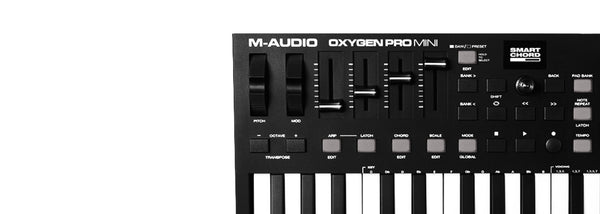
A MIDI keyboard, also called a MIDI controller, sends MIDI messages such as note pitch, note velocity, modulation, and control changes to a computer, hardware synth, drum machine, or other compatible device. It makes no sound by itself. Your DAW, software instrument, or external hardware creates the sound you hear.
A controller is the hands-on part of a software instrument setup. Press a key and your computer can play a sampled piano, synth bass, drum sound, orchestral instrument, or pad. Pads, knobs, faders, and pitch controls can also give you direct control over drum programming, plugin parameters, mixer levels, and effects.
A digital piano has internal sounds and is built around a piano-style playing experience. It suits players who want to learn piano, practice regularly, play at home, or work through songs without opening a DAW. Digital pianos commonly focus on weighted keys, piano sounds, speakers, and headphone practice.
A stage piano adds a performance focus. It provides onboard sounds for rehearsal and live work, along with MIDI connection for DAW sessions. This makes sense for musicians who play piano parts on stage and produce music at home.
| Type | Best for | How you hear sound | Typical playing feel |
|---|---|---|---|
| MIDI keyboard | Music production and software instruments | Computer, headphones, audio interface, or external hardware | Synth-style keys, often compact |
| Digital piano | Piano practice and home playing | Built-in sounds through speakers or headphones | Weighted piano-style keys |
| Stage piano | Live performance and studio use | Built-in sounds through speakers, headphones, or a PA | Weighted piano-style keys |
What Does a MIDI Keyboard Do?
A MIDI keyboard gives you a physical way to play and control music software. Instead of drawing every note with a mouse, you can perform basslines, chords, melodies, drums, and automation in real time. Your timing and velocity become part of the recording, which often gives programmed parts more movement.
- Keys play melodies, chords, basslines, and virtual instruments.
- Pads suit finger drumming, sample triggering, and clip launching.
- Knobs and faders can control plugin settings, mixer levels, sends, filters, and effects.
- Pitch and modulation controls add expression to synth parts and leads.
Controllers work especially well at a desk where your computer is already the centre of the setup. A 25-key model gives you a compact surface for beats, bass, chord progressions, and hooks. A 49-key controller gives both hands more room for chord voicings, larger parts, and software piano playing.
You will also need a sound source. For most producers, that means a laptop, a DAW, software instruments, and headphones or studio monitors. Controllers can also work with compatible hardware synths and drum machines. The Arturia MiniLab 3 includes a 5-pin MIDI output for this kind of hardware connection.
Why Do Digital Pianos Feel Different?
The main reason to choose a digital piano is the keyboard action. Piano students develop finger strength, dynamic control, and coordination on keys that respond more like an acoustic piano. Weighted action gives you resistance under your fingers, creating a more piano-focused experience than the lighter feel common on compact MIDI controllers.
Digital pianos also make practice straightforward. Turn on the instrument, choose a sound, and play. Built-in speakers support casual playing, while headphone output gives you a quieter way to work through scales, repertoire, chord voicings, and songs at home.
An 88-key layout matches the standard piano range and gives you space for two-handed repertoire as your playing develops. A compact controller still works well for songwriting and production, especially in a smaller room. For formal piano study, an 88-key weighted instrument supports the physical habits and range that piano music requires.
Digital pianos can also serve producers who want to record expressive piano performances into music software. A weighted keybed can help you shape dynamics more naturally while playing a piano instrument in your DAW. The choice comes down to your main job: production control, piano practice, or a mix of both.
What Is a Stage Piano?
A stage piano serves players who need a self-contained instrument with piano action, onboard sounds, and MIDI connection. It suits rehearsal rooms, live stages, songwriting sessions, and studio work where one keyboard needs to cover several roles.
This category fits a keyboard player in a band, a singer-songwriter who performs piano-led material, or a producer who wants a serious weighted keyboard for recording. Stage pianos can support quick changes between sounds, layered parts, and keyboard splits during a set.
They also take up more room and demand a larger budget than a small MIDI controller. That investment makes sense if you need an instrument for home practice, rehearsals, performance, and DAW work. The Roland RD-08 is a clear example, pairing hammer-action keys and onboard sounds with USB MIDI for computer integration.
Which Keyboard Should You Buy?
Start with the job you need your first keyboard to handle most often. Your main workflow should drive the decision. A compact MIDI controller makes sense for a computer-based production setup. A digital piano makes sense for focused piano practice and independent playing. A stage piano makes sense if your keyboard will move between home, rehearsal, studio, and stage.
- Choose a MIDI keyboard for software instruments, drum programming, clips, plugins, and DAW control.
- Choose a digital piano for piano practice, weighted keys, onboard sounds, and home playing.
- Choose a stage piano for live performance, piano feel, onboard sounds, and MIDI-based studio work.
Space matters too. A 25-key controller sits easily beside a laptop. A 49-key controller gives you more room for playing chords and two-handed parts. An 88-key digital piano needs a more permanent place in your home, then gives you the full keyboard range for serious practice. If quiet practice is part of your routine, put headphone connection near the top of your checklist.
Recommended MIDI Keyboards and Digital Pianos


Arturia MiniLab 3 MIDI Controller, $159.99 CAD
The Arturia MiniLab 3 is $159.99 CAD for beginner producers and desk-based musicians who need a compact way to play software instruments. It sends MIDI to your computer or compatible hardware, making it a practical entry point for writing beats, basslines, melodies, and chord progressions.
Its 25 velocity-sensitive keys suit compact production setups, while eight RGB pads give you a direct surface for drums and samples. Eight encoders, four faders, and pitch and modulation touch strips add hands-on control over software. USB-C powers the controller from your computer, and its 5-pin MIDI output can connect to hardware synths and drum machines. Hold, Chord, and Arp modes also help turn a small key range into fuller musical parts.
Novation Launchkey 25 MK4 MIDI Keyboard, $279 CAD
The Novation Launchkey 25 MK4 is $279 CAD for producers who want a compact controller with pads and deeper DAW control. It handles software instruments, finger drumming, clip launching, and session control in a computer-based music setup.
You get 25 full-size synth-action keys, 16 velocity-sensitive pads with polyphonic aftertouch, and eight endless encoders. Chord and Scale modes can help newer players build parts that stay in key. Transport controls and dedicated DAW workflow functions also keep your hands on the controller while arranging and recording. It is a strong fit for Ableton-style clip work and beat-focused production.
Arturia KeyLab Essential 49 MK3, $329.99 CAD
The Arturia KeyLab Essential 49 MK3 is $329.99 CAD for producers who want a larger MIDI controller for playing software instruments with more room for both hands. Its 49-key layout suits chord progressions, melodic parts, basslines, and longer piano-style performances in a DAW.
This is the sensible step up from a 25-key controller if octave switching starts interrupting your playing. The extra key range gives you more space to perform left-hand bass parts and right-hand chords or melodies at the same time. It remains a controller, so your computer software or compatible external hardware provides the sound.
Casio CDP-S360, $799.99 CAD
The Casio CDP-S360 is $799.99 CAD for piano learners and home players who need a compact 88-key digital piano for practice and independent playing. It gives you a full piano-style keyboard in a space-conscious format, making it a strong choice for a first home instrument.
Its compact design suits apartments, bedrooms, and smaller studio rooms where an acoustic piano would take over the space. An 88-key digital piano is the right direction for players who want to develop piano technique, practice full-range music, and sit down to play without building a computer production setup first.
Casio Privia PX-S1100, $849.99 CAD
The Casio Privia PX-S1100 is $849.99 CAD for piano learners and home players who need a slim 88-key instrument with its own sound for daily practice. It gives you weighted piano-style playing and built-in speakers without needing a computer-based setup.
Its Smart Scaled Hammer Action keyboard is designed for a piano-focused feel in an ultra-slim chassis. The PX-S1100 includes 18 tones, stereo speakers, a sustain pedal, and two headphone connections for practice. It can run on its included AC adaptor or AA batteries, useful for moving between rooms or taking it to a small venue. Bluetooth MIDI and audio are included through the supplied adapter.
Korg B2 Plus SP, $1,129.99 CAD
The Korg B2 Plus SP is $1,129.99 CAD for beginners and developing pianists who want a complete home piano setup. It handles piano practice with weighted keys, onboard sounds, a dedicated stand, and a three-pedal unit included.
The 88-key NH Natural Weighted Hammer Action keyboard gives you graded touch across the range. Its three pedals include damper with half-pedaling, soft, and sostenuto, which supports more expressive playing as your repertoire grows. Twelve sounds cover acoustic pianos, electric pianos, organ, harpsichord, and strings. USB-C MIDI and audio support can also connect the piano to a computer-based setup later.
Roland RD-08 Stage Piano, $1,449.99 CAD
The Roland RD-08 is $1,449.99 CAD for live players who need weighted piano action, onboard sounds, and MIDI connection to a computer. It handles home practice, rehearsals, stage performance, and DAW integration in one 88-key instrument.
The PHA-4 Standard hammer-action keyboard gives you a piano-oriented playing surface, while built-in stereo speakers cover home practice and smaller rehearsals. Three zones let you layer or split sounds across the keyboard, and 100 scenes can recall complete setups quickly. Its USB Computer port supports class-compliant MIDI for DAW and Apple MainStage integration. A mic input with dedicated effects also supports vocalists who want a compact performance rig.
MIDI Keyboard vs Digital Piano FAQ
Can I learn piano on a MIDI keyboard?
You can learn notes, chords, rhythm, and basic songs on a MIDI keyboard. A weighted 88-key digital piano is the stronger choice for building piano technique, playing full-range music, and developing control over dynamics.
Does a MIDI keyboard make sound on its own?
No. A MIDI controller sends note and control information to a computer, compatible hardware instrument, or other sound source. Your software or external gear creates the sound.
Should a beginner buy 25 keys or 88 keys?
Choose 25 keys if your priority is producing at a desk, programming drums, writing basslines, and playing software instruments. Choose 88 weighted keys if your priority is learning piano, practicing repertoire, and playing two-handed parts across the full range.
Can a stage piano work with music software?
Yes. A stage piano with MIDI connectivity can control software instruments in a DAW while also providing its own sounds for practice and performance. The Roland RD-08 is one example, with a USB Computer port that supports class-compliant MIDI.


