










How to Start DJing: Gear Guide for Beginners

You want to DJ. You've seen someone drop a track at the perfect moment and watched the room explode. Now you're staring at a wall of gear online wondering what you actually need to get started. The good news: you don't need a CDJ setup and a four-figure mixer to learn the fundamentals. The better news: modern DJ controllers put everything you need in one box, and most include the software to get you mixing immediately.
This guide walks you through what beginner DJ gear actually does, what features matter when you're learning, and how to choose your first controller without overspending or buying the wrong thing.
What Does a DJ Controller Do?
A DJ controller is a hardware interface that connects to your laptop or mobile device and controls DJ software. Think of it as a physical representation of the software's interface — instead of clicking with a mouse, you're turning knobs, moving faders, and touching jog wheels. The controller sends MIDI signals to the software, which handles the actual audio processing and playback.
Most beginner controllers include:
- Jog wheels for scratching, nudging tracks, and navigating through songs
- Pitch faders to adjust tempo and beatmatch tracks
- Channel faders and crossfader to control volume and transition between tracks
- EQ knobs (low, mid, high) to shape the sound of each track
- Performance pads for triggering hot cues, loops, and samples
- Built-in audio interface so you can hear what you're doing through headphones and send output to speakers
The controller itself doesn't store or play music. Your tracks live in the DJ software on your computer or device. The controller is the tactile tool that makes mixing feel like an instrument instead of a spreadsheet.
Choosing Your First DJ Software
Your controller choice often determines your software, since most controllers bundle free or lite versions with purchase. The two dominant platforms for beginners are Serato DJ Lite and rekordbox. Both are industry-standard, both work similarly, and both will teach you proper DJ technique.
Serato DJ Lite is free and comes with many entry-level controllers. It handles two decks, basic effects, and works with streaming services like TIDAL and SoundCloud if you have subscriptions. When you're ready to upgrade, Serato DJ Pro unlocks more decks, advanced effects, and DVS (digital vinyl system) support.
rekordbox is Pioneer DJ's ecosystem. The free version offers basic two-deck mixing. Controllers that support rekordbox often also work with Serato, giving you flexibility to try both and see which interface clicks for you.
Some controllers now support mobile DJing via iPad or Android tablets. If you want to DJ without a laptop, look for controllers with USB-C or Bluetooth connectivity and mobile app support.
Essential Features for Learning
Not all controller features matter equally when you're starting out. Here's what actually helps you learn versus what's just nice to have. Keep in mind that feature sets vary significantly between models — what's standard on one controller might be absent on another.
Jog Wheel Size Matters
Larger jog wheels (5-6 inches) are easier to work with when you're learning to beatmatch and scratch. Tiny jog wheels feel cramped and make precise adjustments harder. Some controllers feature capacitive-touch jog wheels that respond to touch without needing pressure, which feels more natural, but this is a premium feature not found on all beginner models.
Dedicated EQ and Filter Knobs
You'll use EQ constantly. Three-band EQ (low, mid, high) per channel is standard across most controllers. Make sure each channel has its own set of knobs, not shared controls. A dedicated filter knob per channel lets you sweep frequencies for smooth transitions, though this feature varies by model.
Performance Pads
Eight pads per deck is common on mid-range controllers. You'll use these for hot cues (jumping to specific points in a track), loops, and samples. More pads doesn't necessarily mean better — eight is plenty for learning. What matters is that the pads are responsive and clearly labeled. Budget controllers may have fewer pads or smaller pad layouts.
Built-In Audio Interface
Every modern controller includes this, but it's worth understanding what it does. The audio interface converts digital audio from your software into analog signals for your speakers and headphones. It also handles the split-cue function that lets you preview the next track in your headphones while the current track plays through the speakers.
Do You Need Speakers and Headphones?
Yes to headphones, maybe to speakers. You cannot DJ without headphones. You need to hear the next track before the audience does so you can beatmatch and cue it properly. Any closed-back headphones work for starting out, but DJ-specific models have swiveling ear cups that make one-ear monitoring easier.
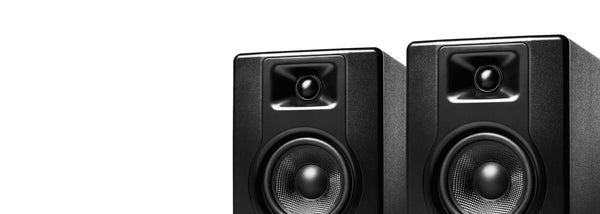
Speakers are optional at first. You can practice through your controller's master output into any powered speakers, computer speakers, or even a home stereo. Studio monitors are ideal if you have them, but they're not required on day one. As you get serious, invest in a pair of active monitors or a portable PA system for parties.
Understanding Controller Layouts
Most beginner controllers follow a similar layout: two decks (left and right sides) with a mixer section in the middle. Each deck has a jog wheel, pitch fader, and performance pads. The mixer section has channel faders, EQ knobs, and a crossfader. This layout mirrors the setup of professional club gear, so muscle memory you build on a beginner controller transfers directly to higher-end equipment.
Some controllers add extra features like FX paddles (dedicated controls for applying effects), built-in drum sounds, or sequencers. These features are model-specific and not universal across beginner controllers. They're fun but not essential for learning the basics. Focus first on beatmatching, phrasing, and smooth transitions. Once those are solid, effects and extras will make more sense.
Streaming vs Downloaded Music
Modern DJ software integrates with streaming services. Serato works with TIDAL, Beatport Link, Beatsource Link, and SoundCloud GO+. rekordbox supports similar services. This means you can DJ with millions of tracks without buying or storing files.
Streaming requires an active internet connection and a subscription to the service. If you're practicing at home, this works fine. If you're playing a gig in a basement with no WiFi, you'll need downloaded tracks. Most DJs use a hybrid approach: stream for practice and discovery, download key tracks for live sets.
File formats matter if you're downloading. DJ software prefers lossless or high-bitrate files (WAV, FLAC, 320kbps MP3). Low-quality MP3s sound thin on a big system. Beatport and Bandcamp sell DJ-friendly file formats. Ripping from YouTube is a bad idea — the audio quality is terrible and you'll hear it.
How Much Should You Spend?
Entry-level DJ controllers range from $179 to $500 CAD. The cheapest models ($179-$250) are fine for figuring out if you like DJing, but they often have smaller jog wheels, fewer pads, and plastic construction. Mid-range controllers ($300-$500) offer better build quality, larger jog wheels, and more features. This is the sweet spot for serious beginners.
Don't buy used gear for your first controller unless you know exactly what you're looking at. Controllers get firmware updates, and older models may not work with current software versions. Buying new means you get the latest compatibility, a warranty, and bundled software.
What About Turntables and CDJs?
Turntables and CDJs are what you'll find in most clubs, but they're not beginner gear. Turntables require vinyl or a DVS (digital vinyl system) setup, which adds cost and complexity. CDJs are expensive and don't include a mixer. Both assume you already know how to DJ.
Start with a controller. Learn beatmatching, phrasing, and track selection. Once you're confident, you can transition to turntables or CDJs if you want. The core skills are the same — you're just using different tools. Many professional DJs still use controllers for mobile gigs and home practice.
Practice Routine for Beginners
Gear is half the equation. The other half is putting in hours. Here's a realistic practice approach:
Week 1-2: Learn your software's interface. Load tracks, set cue points, practice using the jog wheels to navigate. Get comfortable with the layout before you try to mix.
Week 3-4: Beatmatch two tracks manually. Turn off the sync button. Use your ears and the pitch fader to match tempos. This is the hardest part of learning to DJ, and it takes repetition. Do it until you can match beats consistently without looking at waveforms.
Week 5-6: Work on transitions. Practice mixing in and out of tracks using EQ, filters, and the crossfader. Focus on phrasing — mixing at the start of a 16 or 32-bar section sounds cleaner than random transitions.
Week 7-8: Record a 30-minute mix. Listen back. You'll hear mistakes you didn't notice while mixing. This is how you improve. Repeat weekly.
Consistency beats marathon sessions. Thirty minutes of focused practice daily is better than four-hour weekend binges.
Our Recommendations
These controllers cover the range from absolute beginner to serious learner. Each one includes everything you need to start mixing immediately.


The Party Mix II is the entry point if you're testing the waters or DJing house parties. It includes a built-in light show — a unique feature you won't find on most controllers — making it perfect for creating atmosphere at casual events. Simple controls and a price that won't hurt if you decide DJing isn't for you. It's limited compared to the others, but it's honest about what it is.
The Mixtrack Pro FX is where most serious beginners should start. Six-inch jog wheels, dedicated FX paddles for quick-access effects, and Serato DJ Lite included. The interface is intuitive, the build feels solid, and the price is reasonable. This is the controller that will carry you from first mix to first gig.
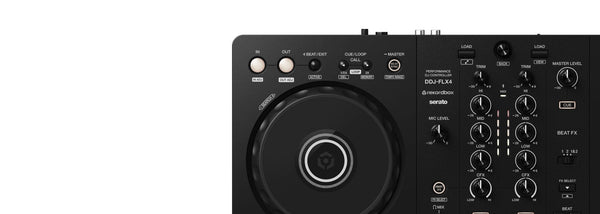
The DDJ-FLX4 offers flexibility with multi-software support (rekordbox, Serato, djay, Traktor) and mobile connectivity. Smart Fader and Smart CFX are training wheels that help you learn transitions, but you can turn them off as you improve. If you want a controller that grows with you, this is it.
The DJ-202 adds production elements with built-in drum sounds and a sequencer — features not typically found on beginner controllers. If you're interested in live mashups or adding original beats to your sets, this controller lets you experiment beyond traditional DJing. It's also compact and portable, good for mobile setups.
Explore Mentioned Brands


FAQ
Can I learn to DJ without buying a controller?
You can download DJ software and practice with a mouse and keyboard, but it's not realistic for learning proper technique. DJing is a physical skill. You need to feel the jog wheels, move the faders, and develop muscle memory. A controller is not optional if you're serious about learning.
How long does it take to learn to DJ?
Basic beatmatching and transitions take 2-3 months of consistent practice. Sounding good in front of people takes 6-12 months. Reading a crowd, building energy, and track selection are skills that develop over years. You can play a decent house party set after a few months. Becoming a skilled DJ is a longer process.
Do I need to learn to beatmatch manually or can I use sync?
Learn manual beatmatching first. Sync is a tool, and it's useful, but if you can't beatmatch by ear you'll struggle when the software glitches or you play on gear without sync. Spend your first few months with sync turned off. Once you can match beats consistently, use sync as a time-saver, not a crutch.
What's the difference between a DJ controller and a mixer?
A DJ controller is an all-in-one unit that includes jog wheels, mixer controls, and an audio interface, designed to control DJ software. A mixer is just the middle section — it blends audio from external sources like turntables or CDJs. Controllers are for software DJing. Mixers are for hardware setups. Beginners should start with a controller.


