













How to Build a DJ Set: Song Selection and Flow

Introduction
Building a DJ set isn't just about playing songs back-to-back. It's about creating a journey — one that keeps people moving, surprises them at the right moments, and makes sense as a whole. You're choosing tracks, deciding when to bring energy up or pull it back, and figuring out how to transition between songs so the flow never breaks. This guide walks you through the fundamentals: how to select tracks that work together, how to structure a set with intentional energy shifts, and how to develop transitions that feel natural. If you're starting out or looking to refine your approach, these principles apply across genres and formats.
Understanding Energy and Flow
Energy is the backbone of your set. You control it through tempo, intensity, and the emotional weight of each track. A common mistake is playing every high-energy track you have right at the start — you peak too early and have nowhere to go. Instead, think in waves. Build gradually, let the energy plateau for a few tracks, then pull back before building again.
Flow is how smoothly one track moves into the next. Good flow means the crowd doesn't notice the transition — they're too busy dancing. Bad flow is jarring: a sudden key clash, a tempo jump that throws off the groove, or a stylistic shift that makes no sense. You achieve flow through harmonic mixing (matching keys), tempo management (keeping BPM changes gradual), and choosing tracks with complementary textures.
Start by mapping your set on paper or in your DJ software. Mark which tracks are peak moments, which are groovers, and which are cooldowns. A typical one-hour set might look like this:
- 0-15 minutes: Warm-up. Mid-tempo, establish the vibe.
- 15-30 minutes: Build energy. Increase tempo slightly, introduce bigger drops.
- 30-45 minutes: Peak. Your highest-energy tracks, the moments people remember.
- 45-60 minutes: Wind down or sustain. Depends on your slot — closing DJ brings it down, mid-set DJ hands off strong.
This isn't a rigid formula. Read the room. If the crowd is already hyped when you start, skip the warm-up. If they're tired, give them a breather before pushing hard again.
Song Selection Strategies
Your track selection defines your sound. Collect music constantly — dig through record pools, streaming services, Bandcamp, SoundCloud. Build crates organized by energy level, genre, or mood. When you're preparing a set, pull from multiple crates so you have options.
Here's what to consider when choosing tracks:
- Key compatibility: Use Camelot Wheel or Open Key notation. Tracks in the same key mix seamlessly. Adjacent keys work too. Jumping across the wheel creates dissonance.
- BPM range: Stay within a 10-15 BPM range for most of your set. Gradual tempo shifts (2-4 BPM per transition) keep dancers locked in. Big jumps work for dramatic genre switches, but use sparingly.
- Familiarity vs. discovery: Balance crowd-pleasers with tracks they don't know. Too many hits and you're a jukebox. Too many obscure cuts and you lose them. A good ratio is 60% recognizable, 40% new.
- Arrangement awareness: Know your tracks inside out. Where's the breakdown? When does the bassline drop? Which tracks have long intros perfect for mixing? Mark cue points in advance.
Genre matters, but not as much as energy and vibe. A house DJ can drop a techno track if the energy matches. A hip-hop DJ can sneak in a funk break if it fits the moment. Your job is to make it work, not to stay in a lane for the sake of it.
Building Transitions That Work
Transitions are where DJing becomes an art. A perfect transition is invisible — the crowd doesn't realize a new track started. Here are the core techniques:
Beatmatching: Sync is fine for practice, but learn to beatmatch by ear. It trains you to hear when tracks drift and makes you a better DJ. Match the tempo of the incoming track to the outgoing one, align the beats, then blend.
EQ mixing: Use your EQ to carve space. As the new track comes in, cut its bass and bring in the mids and highs. Gradually swap the bass from the old track to the new one. This prevents low-end mud and keeps the groove tight.
Phrasing: Most dance music is built in 16- or 32-bar phrases. Mix on the phrase — bring the new track in at the start of a 16-bar section, not halfway through. Your ears will tell you when it's right: drops, breakdowns, and build-ups all happen on phrase boundaries.
Effects and filters: High-pass filters, reverb, and delay can smooth transitions. A simple high-pass filter sweep on the outgoing track while the new one comes in creates a natural handoff. Don't overdo it — effects are seasoning, not the main ingredient.
Creative cuts: Not every transition needs to be a long blend. Quick cuts work for high-energy moments. Drop the new track right on the one, no blend at all. It's bold, but when it works, it hits hard.
Reading the Room
Your setlist is a plan, not a contract. The crowd tells you what they need. Are they dancing? Keep going. Are they standing still? Change direction. Did a track fall flat? Move on quickly.
Watch body language. Heads nodding, arms up, people singing along — you're on track. People checking phones, heading to the bar, or standing in clusters talking — you've lost them. Adjust. Maybe you need more energy. Maybe you need a familiar track. Maybe the vibe is off and you need to reset.
Every room is different. A late-night club set at 2am demands different energy than an opening set at 10pm. A festival crowd wants big moments. An intimate bar wants groove and conversation-friendly vibes. Adapt your approach to the context.
Practice and Preparation
Record your practice sets. Listen back critically. Did the energy build make sense? Were the transitions clean? Did you play too many similar tracks in a row? Treat every practice session like a real gig.
Prepare more music than you'll play. For a one-hour set, have 90 minutes of material ready. This gives you flexibility to adapt. Organize your library so you can find tracks quickly under pressure. Use folders, playlists, or crates — whatever system works for you.
Study DJs you admire. Listen to their mixes and analyze the structure. How do they build energy? When do they drop a surprise track? How long do they let a track ride before mixing out? You're not copying — you're learning the language.
Our Recommendations
Once you understand song selection and flow, you need a controller that lets you execute your ideas. These four options cover different skill levels and budgets, all designed to help you develop your mixing skills.


The Numark Mixtrack Pro FX is built for beginners working on transitions and effects. Its FX paddles let you experiment with filters and delays while you're learning to read energy shifts in your set.
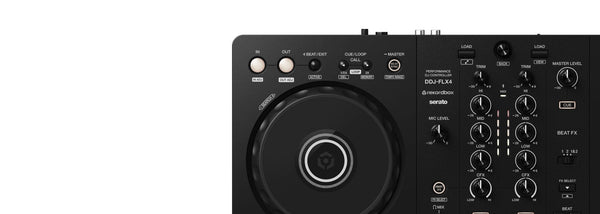
The Pioneer DJ DDJ-FLX4 supports both rekordbox and Serato DJ, so you can explore different software workflows as you develop your track selection process. Its Smart Fader feature helps you understand how tempo and EQ adjustments affect transitions — useful training wheels while you're building muscle memory.
The Denon DJ Prime Go+ is a standalone system with battery power and streaming integration. Practice your set structure anywhere — no laptop required. The Wi-Fi streaming access means you can test new tracks in context without committing to a full download, which speeds up your crate-digging process.
The Rane DJ Four is a 4-channel stems controller for DJs ready to work with more complex mixing strategies. Stems let you isolate vocals, drums, bass, and melody — giving you surgical control over transitions and mashups. It's a step up in both capability and price, suited for DJs who've mastered the basics and want deeper creative control.
Explore Mentioned Brands


FAQ
How many tracks should I prepare for a one-hour DJ set?
Prepare around 25-30 tracks for a one-hour set. You'll probably play 15-20, but having extra gives you flexibility to adjust based on the crowd. Organize them by energy level so you can pivot quickly if needed.
Should I plan my entire setlist in advance or freestyle?
Hybrid approach works best. Plan the first 3-4 tracks and a few anchor tracks for key moments (your peak, your closer). Leave the middle flexible so you can respond to the room. As you gain experience, you'll freestyle more, but structure helps when you're starting out.
How do I fix a bad transition mid-set?
Cut it fast. If a blend isn't working, don't drag it out — use the crossfader to switch cleanly to the new track or kill the incoming track and stay with what's playing. The crowd forgives quick recoveries. They don't forgive trainwrecks you let run for 30 seconds.
What's the best way to organize my music library for DJing?
Use a combination of BPM, key, and energy-level tags. Create playlists or crates for different moods (openers, peak tracks, cooldowns). Color-code tracks you know work well together. The goal is to find the right track in under 10 seconds when you're live.


