














Handheld vs Lavalier vs Headset Microphones

Choosing between a handheld, lavalier, and headset microphone comes down to how you perform and how much control you need over your sound. This guide covers options priced from $149 CAD to $1,200 CAD for singers, presenters, worship teams, fitness instructors, and theatre groups who need clear amplified voice without fighting feedback. A handheld gives you the strongest close-up vocal signal but occupies a hand. A lavalier is discreet and hands free for speech. A headset keeps the mic close while leaving both hands free, making it the practical choice for active presenters and performers.
Lavalier vs Handheld Microphone: The Main Difference
The biggest difference is distance from your mouth. A handheld microphone is normally held close to your lips. That close position captures a strong vocal signal before it picks up much room sound, monitor spill, or PA noise. You control the level by moving the mic closer or farther away, which is useful for singers who shift between quiet lines and louder passages.
A lavalier clips to clothing, usually around the chest area. It keeps your hands free and stays visually subtle, but it sits much farther from your mouth than a handheld. Your sound engineer usually needs more gain to bring that voice up in the mix. More gain can mean less room before feedback, particularly on a loud stage or in a reverberant worship space.
For speech, a lavalier can be the cleanest visual option. For loud singing, it is usually the wrong tool. Clothing rustle, necklaces, loose collars, and poor placement can all affect the result.
- Choose handheld if you sing, pass a microphone between speakers, or want the most direct control over your vocal level.
- Choose lavalier if you give speeches, teach, preach, or present and need your hands free with minimal visual distraction.
- Choose headset if you move constantly, turn your head often, or need steady volume while keeping both hands available.
Why Mic Position Affects Feedback and Clarity
Gain before feedback describes how loud a sound system can get before the microphone starts picking up the speakers and producing that familiar squeal. Mic placement has a major effect on it.
A handheld is close to your mouth, so the mixer can use less gain to achieve a clear vocal level. This gives the sound system more room before feedback. It also means you can work the mic creatively. Bring it closer for a soft spoken line, pull it back for a louder vocal, and keep it pointed away from stage monitors when possible.
A lavalier remains at chest level, so the microphone hears more of the room compared with your direct voice. That is fine for a presenter in a controlled environment, but it can become difficult with loud floor wedges, a live band, or enthusiastic congregation singing. Careful placement matters. Secure the cable, keep the capsule clear of fabric movement, and avoid placing it where clothing rubs against it.
A headset solves much of the distance problem. Its microphone stays near the corner of your mouth, so your level stays more consistent as you look left, right, down, or toward an audience. It also helps a sound engineer maintain clear speech without riding the fader constantly.
| Microphone type | Position | Best use | Feedback control | Appearance and comfort |
|---|---|---|---|---|
| Handheld | Held close to the mouth | Live vocals, guest speakers, shared microphones | Strongest voice signal and high user control | Visible and occupies one hand |
| Lavalier | Clipped to clothing | Presentations, lectures, worship speaking | Usually less gain before feedback than handheld or headset | Discreet and hands free |
| Headset | Fixed near the mouth | Fitness, theatre, active presenters | Strong, consistent level with good feedback control | Hands free, though more visible than a lavalier |
Wired and Wireless Microphone Setups
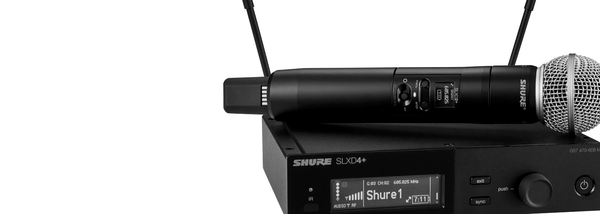
A handheld microphone can be wired or wireless. A wired handheld such as the Shure SM58 connects directly to a mixer or stage box, making it a sensible choice for a fixed stage position, rehearsal room, or venue that already has cable runs in place. Wireless handheld systems are useful when singers, speakers, or hosts need freedom to move without managing a cable.
Lavalier and headset microphones normally connect to a wireless bodypack worn on a belt, waistband, or costume. The bodypack sends audio to a receiver connected to the venue's sound system. This setup is common for instructors, actors, worship leaders, and presenters who need to walk, gesture, demonstrate exercises, or handle props.
Wireless costs more than a basic wired microphone because you are buying a transmitter, receiver, microphone, power solution, and radio system. It also requires more setup discipline. Check batteries or charging before an event, position receivers carefully, and coordinate frequencies when multiple systems are in use.
In Canada, ISED's decision on wireless microphones lets them operate licence-exempt across 470 to 608 MHz, and the UHF systems here tune inside that range.
Which Microphone Type Should You Buy?
Start with the job the microphone has to do. A singer who needs to cut through drums, stage monitors, and a full band should usually use a handheld. The close position gives you a strong source signal and lets you control your vocal dynamics in real time.
A presenter who needs to turn pages, demonstrate a product, or lead a service will usually be happier with a lavalier. It is less visible and leaves your hands free, provided the room is not excessively loud and the microphone is placed carefully.
For fitness instruction, theatre, dance, or a speaker who moves constantly, spend the extra money on a headset. A fixed capsule near your mouth is easier on the sound engineer and more reliable for the audience. It may be more visible than a lavalier, but clear speech matters more than hiding the microphone when the room is loud.
Budget matters too. A $149 CAD wired handheld covers a lot of live vocal work. Wireless lavalier and headset systems in this guide sit near $1,000 CAD because they include the transmission system needed to get your voice to the PA without a cable.
Recommended Handheld, Lavalier, and Headset Microphones


Shure SM58 Dynamic Vocal Microphone
The Shure SM58 is $149 CAD for singers, worship vocalists, and presenters who need a dependable wired microphone for close-up voice work. Its cardioid pattern helps isolate your voice from monitors and other stage sound, while its built-in windscreen helps reduce breath pops. The tailored vocal response includes a brightened midrange for clarity and bass rolloff to control proximity effect, useful when you sing close to the grille. If you need a straightforward live vocal mic and do not need wireless movement, this is the sensible baseline.
Electro-Voice RE3-ND76-5H Wireless Handheld System
The Electro-Voice RE3-ND76-5H is $959 CAD for singers, hosts, and mobile presenters who need handheld vocal control without a cable. Its ND76 dynamic cardioid microphone head is intended for voice performance and presentations, with a clear and balanced vocal character. The system tunes from 560 to 596 MHz and includes frequency scanning and sync functions to make setup easier. Choose it when you want the close-miking benefits of a handheld but need to move across a stage or event space.
Shure GLXD14+/85M Digital Wireless Lavalier System
The Shure GLXD14+/85M is $1,200 CAD for presenters, educators, and worship speakers who need discreet hands-free speech reinforcement. It pairs the WL185M lavalier with a bodypack and GLXD4+ receiver, operating in the 2.4 and 5.8 GHz bands. Its rechargeable battery runs for up to 12 hours. This is a strong fit for spoken-word work where appearance and free hands matter, but a headset or handheld remains the better call for loud singing.
Electro-Voice RE3-BPCL-5L Wireless Lavalier System
The Electro-Voice RE3-BPCL-5L is $1,059 CAD for public speakers and presenters who need a hands-free bodypack system with a cardioid lavalier. The included CL3 microphone is designed for presentation and sound reinforcement, and its cardioid pattern rejects ambient sound to help improve gain before feedback. The system tunes from 488 to 524 MHz, with frequency scanning and transmitter sync for setup. It is a practical choice for speech in spaces where a standard lavalier needs extra help rejecting room sound.
Shure GLXD14+/SM35 Digital Wireless Headset System
The Shure GLXD14+/SM35 is $985 CAD for fitness instructors, active presenters, and performers who need hands-free voice with a consistent mic position. The SM35 headworn microphone stays near your mouth as you move, helping your level remain steady when you turn your head or demonstrate an exercise. This digital system operates in the 2.4 and 5.8 GHz bands and includes a rechargeable battery with up to 12 hours of use. It is the practical upgrade over a lavalier for active speech.
Electro-Voice RE3-BPHW-5L Wireless Headset System
The Electro-Voice RE3-BPHW-5L is $1,059 CAD for theatre groups, athletic instructors, and presenters who need hands-free voice with strong isolation near the mouth. Its HW3 supercardioid condenser headworn microphone is intended for voice performance, presentations, and athletic instruction. The flexible gooseneck makes positioning easier, while the shock-mounted microphone head helps reduce handling noise. With tuning from 488 to 524 MHz, this system suits louder sound reinforcement situations where a lavalier may struggle.
Handheld, Lavalier, and Headset Microphone FAQ
Is a lavalier or handheld microphone better for speaking?
A lavalier is usually better for a speaker who needs both hands free and wants a subtle look. A handheld is better if the room is loud, feedback is a concern, or you want more direct control over level and mic technique.
Can you sing into a lavalier microphone?
You can, but lavaliers are generally better suited to speech. Their position on clothing places them farther from the mouth, which can make loud singing and high stage volume harder to manage. A handheld or headset is normally the stronger choice for singers.
Why do fitness instructors use headset microphones?
Fitness instructors move, turn their heads, and speak over loud music. A headset keeps the microphone close to the mouth at a fixed position, so the vocal level stays more consistent during instruction.
Does a headset microphone give better feedback control than a lavalier?
Usually, yes. A headset sits closer to your mouth than a lavalier, so it can deliver a stronger voice signal with less gain required from the sound system. The result is typically clearer speech and more room before feedback.


