



















Arturia vs Korg: Best Synth and MIDI Brand in Canada 2026

Arturia and Korg sit at the centre of the modern synth market, and Canadian producers keep asking the same question: which brand actually fits your workflow? Arturia leans into deep sound design, fully analog flagships, and a growing studio ecosystem that now includes audio interfaces. Korg builds instruments you can plug in and play, from hybrid polysynths to battery-powered portables that have defined stages and bedrooms for decades. One brand rewards patch explorers. The other rewards hands-on players who want results fast.


Arturia: What They Do Best
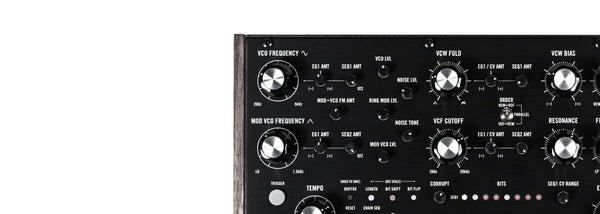
Arturia built its reputation on software emulations, then moved hard into hardware that feels like a studio instrument, not a toy. The PolyBrute is the clearest statement of that approach: a 6-voice fully analog polysynth with two VCOs per voice, dual filters on every voice (a 12 dB Steiner-Parker and a ladder filter), and a 61-key keyboard with velocity and aftertouch. Oscillator waves include saw, triangle with metalizer, square with PWM, sub, noise, plus FM and sync. Morph blends two complete patch states, while the Morphee 3D controller and ribbon strip keep performance tactile. Black walnut side panels finish a premium build at $3999.99 CAD.
Rhythm is another Arturia strength. The DrumBrute Impact gives you 10 pure analog drum instruments, a dedicated Color knob on each sound for fast timbre shifts, and analog distortion on the master output. The sequencer holds 64 patterns of up to 64 steps, with independent track lengths for polyrhythms, song mode for chaining, plus a Pattern Looper and Roller for live fills. Street price is $429.99 CAD. Beyond synths and drums, Arturia covers interfaces from the budget MiniFuse line up to the AudioFuse Studio. If you want deep modulation, hands-on analog tone, and one brand that spans keys, drums, and I/O, Arturia is built for that path.
Korg: What They Do Best
Korg ships instruments people actually finish tracks on. The Minilogue XD at $999.99 CAD is the hybrid sweet spot: four voices, two analog VCOs per voice (sawtooth, triangle, and square with wave shaping), plus a third digital multi-engine for filtered noise, VPM (Variable Phase Modulation), and a user oscillator slot loaded through the logue SDK. A joystick handles real-time modulation in place of a simple pitch wheel, and the effects section is a clear step up from the original Minilogue.
Portability and identity matter just as much. The MicroKORG 2 updates a stage classic with a virtual analog engine (up to 8 voices in single mode, or 4 in dual-layer), a loop recorder, and a 2.8-inch colour IPS display. The vocal section goes past a basic vocoder: you get hard-tune pitch correction and a harmonizer that pitch-shifts and layers your voice, with the included gooseneck condenser mic connecting directly. Programs land in 256 slots across Classic, Modern, and Future banks. It stays compact and battery-powered at $849.99 CAD. Lower down, the Volca line keeps analog fun under $250. Korg also ships hybrid drum tools like the Drumlogue. The through-line is clear: playable layouts, hybrid engines, and price points that hit beginners and gigging players without forcing a flagship budget.
Head-to-Head: Key Differences
Both brands make serious synths. They just solve different problems. Arturia pushes deeper analog architecture and studio-facing gear. Korg prioritizes immediate playability and a wider ladder of entry points.
| Factor | Arturia | Korg |
|---|---|---|
| Build quality | Premium flagships (PolyBrute wood panels, dense controls, 61-key aftertouch board); solid compact builds on drum gear | Reliable gig-ready chassis; compact bodies designed for stages, travel, and battery use on key models |
| Sound signature | Fully analog paths on flagships, dual filters per voice, Morph between full patch states, heavy performance modulation | Hybrid analog plus digital multi-engines, clear preset libraries, strong leads, pads, and expanded vocoder character |
| Software ecosystem | Roots in Arturia software instruments; hardware range now includes full audio interface lines | logue SDK for user oscillators and engines on hybrid models; long-running editor and preset culture |
| Support and updates | Firmware and companion software updates across synth and interface lines | Long product lifecycles; SDK keeps Minilogue XD-class instruments expandable years later |
| Value for money | Strong midrange rhythm gear at $429.99 CAD; flagship analog poly money is real and the feature set matches | Clear rung-by-rung pricing from Volca Keys at $222.99 CAD up through Minilogue XD and MicroKORG 2 |
| Studio beyond synths | USB interfaces from MiniFuse 2 through AudioFuse Studio | Focused on instruments and drum machines more than full I/O ranges |
If you care about one ecosystem covering synthesis and recording hardware, Arturia has the broader desk footprint. If you want a synth you understand in an afternoon and can still grow into, Korg usually gets you there with less friction.
Which Brand Is Right for You?
Pick the brand that matches how you write music, not the one with the louder catalogue copy.
- Choose Arturia if: You want deep analog architecture and modulation in the PolyBrute sense (dual VCOs, dual filters, Morph, Morphee), you like dedicated analog drum machines with Color controls and performance sequencers, or you prefer one brand for synths and USB audio interfaces in the same studio.
- Choose Korg if: You want hybrid poly synths that stay playable at $999.99 CAD with analog VCOs plus a digital multi-engine, you need a compact vocoder with hard-tune and harmonizer tools, or you are building upward from affordable Volcas without jumping straight to flagship pricing.
Many Canadian rooms end up with both: a Korg for fast ideas and an Arturia box when the patch needs more depth. Free shipping at Blackout Audio starts at $199 CAD, which covers most of the gear on this page when you order from our Toronto-based shop that ships across Canada.
More Products from Both Brands
Outside the flagships, both catalogues have workhorse options worth a look. ArturiaРІР‚в„ўs interface line runs from the compact MiniFuse 2 up to the AudioFuse Studio. Korg answers on the rhythm and portable side with the Drumlogue and Volca Keys.


The AudioFuse Studio ($1349.99 CAD) is an 18-in/20-out USB-C interface with four DiscretePRO mic, instrument, and line preamps, four extra line inputs (channels 5-6 switchable to phono/RIAA), Bluetooth audio reception (aptX and AAC), dual speaker pairs, dual headphones, inserts, reamp outputs, plus ADAT, S/PDIF, and word clock. Resolution goes to 24-bit/192 kHz. The MiniFuse 2 ($199.99 CAD) keeps home tracking simple: 2-in/2-out USB-C, combo XLR inputs with 48V on both channels, 5-pin MIDI I/O, balanced TRS outs, direct monitoring, virtual loopback, a USB-A hub port, and bus power so you skip the wall wart.
On the Korg side, the Drumlogue ($849.99 CAD) mixes true analog kick, snare, and hi-hat circuits with eight digital parts that use PCM samples, physical modeling, and user-loadable engines via the logue SDK. You get a 64-step sequencer, 16 velocity-sensitive pads, and a built-in speaker. The Volca Keys ($222.99 CAD) remains a three-voice analog loop synth with three VCOs, detune, ring mod, portamento, a 12 dB/oct low-pass filter, an analog delay, a 16-step sequencer, and a touch keyboard that runs on batteries.
Browse Synths and Interfaces
Ready to compare engines, I/O, and Canadian pricing side by side? Use the collections below to move from this brand matchup into the full synth and interface catalogues we stock for producers across Canada.


Start with digital and hybrid synthesizers if you are still deciding between a Minilogue-class instrument and a deeper analog poly. Switch to audio interfaces when your next bottleneck is preamps, monitoring, or getting MIDI and audio into the DAW cleanly. Arturia and Korg both reward long-term ownership; the better buy is


