














Collection: Adapter Cables

-
 Hosa
HosaSTX-105M Balanced Interconnect (1/4 in TRS to XLR3M, 5 ft)
Regular price $11.99Regular priceUnit price per$11.99Sale price $11.99 -
 Hosa
HosaSTX-115F Balanced Interconnect (XLR3F to 1/4 in TRS, 15 ft)
Regular price $23.99Regular priceUnit price per$23.99Sale price $23.99 -
 Hosa
HosaSTX-115M Balanced Interconnect (1/4 in TRS to XLR3M, 15 ft)
Regular price $20.99Regular priceUnit price per$20.99Sale price $20.99 -
Hosa
STX-120F Balanced Interconnect (XLR3F to 1/4 in TRS, 20 ft)
Regular price $28.99Regular priceUnit price per$28.99Sale price $28.99 -
Hosa
STX-120M Balanced Interconnect (1/4 in TRS to XLR3M, 20 ft)
Regular price $25.99Regular priceUnit price per$25.99Sale price $25.99 -
 Hosa
HosaTTQ-105 Balanced Interconnect (TT TRS to 1/4 in TRS, 5 ft)
Regular price $19.99Regular priceUnit price per$19.99Sale price $19.99 -
 Hosa
HosaTTS-102 Balanced Interconnect (TT TRS to Same, 2 ft)
Regular price $15.99Regular priceUnit price per$15.99Sale price $15.99 -
 Hosa
HosaTTX-103F Balanced Interconnect (XLR3F to TT TRS, 3 ft)
Regular price $22.99Regular priceUnit price per$22.99Sale price $22.99 -
 Hosa
HosaTTX-103M Balanced Interconnect (TT TRS to XLR3M, 3 ft)
Regular price $23.99Regular priceUnit price per$23.99Sale price $23.99 -
 Hosa
HosaXFF-101-5 Balanced Interconnect (Right-angle XLR3F to XLR3M, 1.5 ft)
Regular price $15.99Regular priceUnit price per$15.99Sale price $15.99 -
Hosa
XFF-103 Balanced Interconnect (Right-angle XLR3F to XLR3M, 3 ft)
Regular price $15.99Regular priceUnit price per$15.99Sale price $15.99 -
Hosa
XFF-105 Balanced Interconnect (Right-angle XLR3F to XLR3M, 5 ft)
Regular price $17.49Regular priceUnit price per$17.49Sale price $17.49 -
Hosa
XFF-110 Balanced Interconnect (Right-angle XLR3F to XLR3M, 10 ft)
Regular price $20.99Regular priceUnit price per$20.99Sale price $20.99 -
Hosa
XFF-115 Balanced Interconnect (Right-angle XLR3F to XLR3M, 15 ft)
Regular price $25.99Regular priceUnit price per$25.99Sale price $25.99 -
Hosa
XFF-125 Balanced Interconnect (Right-angle XLR3F to XLR3M, 25 ft)
Regular price $33.99Regular priceUnit price per$33.99Sale price $33.99 -
 Hosa
HosaXLR-102 Balanced Interconnect (XLR3F to XLR3M, 2 ft)
Regular price $14.99Regular priceUnit price per$14.99Sale price $14.99 -
Hosa
XLR-103 Balanced Interconnect (XLR3F to XLR3M, 3 ft)
Regular price $15.99Regular priceUnit price per$15.99Sale price $15.99 -
Hosa
XLR-105 Balanced Interconnect (XLR3F to XLR3M, 5 ft)
Regular price $17.49Regular priceUnit price per$17.49Sale price $17.49 -
Hosa
XLR-110 Balanced Interconnect (XLR3F to XLR3M, 10 ft)
Regular price $20.99Regular priceUnit price per$20.99Sale price $20.99 -
Hosa
XLR-115 Balanced Interconnect (XLR3F to XLR3M, 15 ft)
Regular price $23.99Regular priceUnit price per$23.99Sale price $23.99 -
Hosa
XLR-120 Balanced Interconnect (XLR3F to XLR3M, 20 ft)
Regular price $27.99Regular priceUnit price per$27.99Sale price $27.99 -
 Hosa
HosaXRF-102 Unbalanced Interconnect (XLR3F to RCA, 2 ft)
Regular price $13.49Regular priceUnit price per$13.49Sale price $13.49 -
Hosa
XRF-103 Unbalanced Interconnect (XLR3F to RCA, 3 ft)
Regular price $13.49Regular priceUnit price per$13.49Sale price $13.49 -
Hosa
XRF-105 Unbalanced Interconnect (XLR3F to RCA, 5 ft)
Regular price $14.49Regular priceUnit price per$14.49Sale price $14.49 -
Hosa
XRF-110 Unbalanced Interconnect (XLR3F to RCA, 10 ft)
Regular price $16.49Regular priceUnit price per$16.49Sale price $16.49 -
Hosa
XRF-115 Unbalanced Interconnect (XLR3F to RCA, 15 ft)
Regular price $20.99Regular priceUnit price per$20.99Sale price $20.99 -
 Hosa
HosaXRM-102 Unbalanced Interconnect (RCA to XLR3M, 2 ft)
Regular price $12.99Regular priceUnit price per$12.99Sale price $12.99 -
Hosa
XRM-103 Unbalanced Interconnect (RCA to XLR3M, 3 ft)
Regular price $13.49Regular priceUnit price per$13.49Sale price $13.49 -
Hosa
XRM-105 Unbalanced Interconnect (RCA to XLR3M, 5 ft)
Regular price $14.49Regular priceUnit price per$14.49Sale price $14.49 -
Hosa
XRM-110 Unbalanced Interconnect (RCA to XLR3M, 10 ft)
Regular price $15.99Regular priceUnit price per$15.99Sale price $15.99 -
Hosa
XRM-115 Unbalanced Interconnect (RCA to XLR3M, 15 ft)
Regular price $20.99Regular priceUnit price per$20.99Sale price $20.99 -
Hosa
XRM-120 Unbalanced Interconnect (RCA to XLR3M, 20 ft)
Regular price $25.99Regular priceUnit price per$25.99Sale price $25.99 -
 Hosa
HosaXRR-101-5 Balanced Interconnect (XLR3F to Right-angle XLR3M, 1.5 ft)
Regular price $15.99Regular priceUnit price per$15.99Sale price $15.99 -
Hosa
XRR-103 Balanced Interconnect (XLR3F to Right-angle XLR3M, 3 ft)
Regular price $16.49Regular priceUnit price per$16.49Sale price $16.49 -
Hosa
XRR-105 Balanced Interconnect (XLR3F to Right-angle XLR3M, 5 ft)
Regular price $17.99Regular priceUnit price per$17.99Sale price $17.99 -
Hosa
XRR-110 Balanced Interconnect (XLR3F to Right-angle XLR3M, 10 ft)
Regular price $20.99Regular priceUnit price per$20.99Sale price $20.99 -
Hosa
XRR-115 Balanced Interconnect (XLR3F to Right-angle XLR3M, 15 ft)
Regular price $26.99Regular priceUnit price per$26.99Sale price $26.99 -
Hosa
XRR-125 Balanced Interconnect (XLR3F to Right-angle XLR3M, 25 ft)
Regular price $33.99Regular priceUnit price per$33.99Sale price $33.99 -
 Hosa
HosaCFR-210 Stereo Breakout (3.5 mm TRSF to Dual RCA, 10 ft)
Regular price $16.49Regular priceUnit price per$16.49Sale price $16.49 -
 Hosa
HosaCMR-203R Stereo Breakout (Right-angle 3.5 mm TRS to Dual RCA, 3 ft)
Regular price $12.99Regular priceUnit price per$12.99Sale price $12.99 -
 Hosa
HosaCMR-206R Stereo Breakout (Right-angle 3.5 mm TRS to Dual RCA, 6 ft)
Regular price $15.99Regular priceUnit price per$15.99Sale price $15.99 -
 Hosa
HosaCMR-215 Stereo Breakout (3.5 mm TRS to Dual RCA, 15 ft)
Regular price $23.99Regular priceUnit price per$23.99Sale price $23.99 -
 Hosa
HosaCMR-225 Stereo Breakout (3.5 mm TRS to Dual RCA, 25 ft)
Regular price $32.49Regular priceUnit price per$32.49Sale price $32.49 -
 Hosa
HosaCYX-402M Stereo Breakout (3.5 mm TRS to Dual XLR3M, 2 m)
Regular price $20.99Regular priceUnit price per$20.99Sale price $20.99 -
 Hosa
HosaCYX-403M Stereo Breakout (3.5 mm TRS to Dual XLR3M, 3 m)
Regular price $23.99Regular priceUnit price per$23.99Sale price $23.99 -
 Hosa
HosaHMP-003Y Pro Stereo Breakout (REAN 3.5 mm TRS to Dual 1/4 in TS, 3 ft)
Regular price $23.99Regular priceUnit price per$23.99Sale price $23.99 -
 Hosa
HosaHMP-006Y Pro Stereo Breakout (REAN 3.5 mm TRS to Dual 1/4 in TS, 6 ft)
Regular price $25.99Regular priceUnit price per$25.99Sale price $25.99 -
 Hosa
HosaHMP-010Y Pro Stereo Breakout (REAN 3.5 mm TRS to Dual 1/4 in TS, 10 ft)
Regular price $27.99Regular priceUnit price per$27.99Sale price $27.99


Adapters & Breakouts
Fixes the mismatch without another box. TRS to XLR for monitors and desks, 3.5 mm to 1/4 for phones and interfaces, and a short XLR Y for splitting a mic feed.


Phone & Laptop Breakouts
Split a 3.5 mm stereo output into two line channels. CMP-153 feeds dual 1/4" inputs, Digiflex HIN hits dual RCA, CMR-203 is the short Hosa RCA breakout for desks and DJ booths.


XLR to 1/4 for Desks
Connect XLR outputs or inputs to 1/4" TRS without improvising. Digiflex HXFS-6 is female XLR to TRS, HXMS-6 is male XLR to TRS, Warm Audio Pro is the short premium desk hop.


Inserts & Headphone Jacks
Solve insert sends and headphone jack mismatches fast. STP-203 is the classic TRS insert Y, YPP-106 splits a 1/4" jack to dual TS, GHP-105 steps 3.5 mm headphones up to a 1/4" cue jack.
Adapter Cables: What to Know
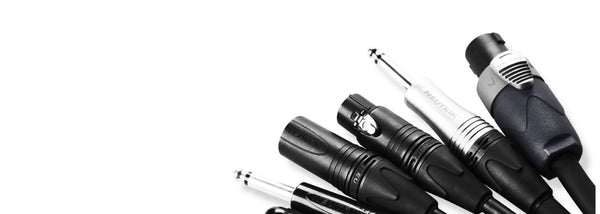
Adapter cables bridge incompatible connectors in your studio, on stage, or in your DJ booth. You need them when your audio interface has TRS outputs but your monitors expect XLR, when your synth uses 3.5mm and your mixer needs quarter-inch, or when you're patching vintage gear with modern equipment. These aren't glamorous purchases, but the wrong adapter introduces noise, signal loss, or intermittent connections. The right one disappears into your signal chain. Most professionals keep a drawer full of common adapters because the alternative is stopping a session to order cables online.
What to Look For
Cable quality matters more than you'd think. Cheap adapters use thin conductors and poor shielding, which means hum and RF interference in your signal path. Look for oxygen-free copper conductors and proper braided or spiral shielding. Connector quality is equally critical: gold-plated contacts resist corrosion and maintain consistent contact pressure over hundreds of plug cycles. Pay attention to strain relief at both ends, this is where cheap cables fail first. For balanced connections (XLR, TRS), verify the adapter maintains proper wiring: pin 2 hot, pin 3 cold, pin 1 ground. Mismatched impedances cause problems too: instrument-level adapters aren't interchangeable with line-level adapters. If you're adapting between balanced and unbalanced connections, understand that you're changing the signal's noise rejection characteristics. Length matters: every meter of cable adds capacitance, which rolls off high frequencies. Keep adapters as short as practical for your application.
Top Brands
Hosa dominates this category with reliable, affordable options for nearly every connection scenario. Digiflex offers professional-grade cables built for Canadian touring conditions and studio permanence.
Shop Adapter Cables at Blackout Audio
The adapter you need depends entirely on what you're connecting. XLR to TRS for monitor feeds. Quarter-inch to 3.5mm for headphone splits. RCA to XLR for integrating consumer gear into pro setups. Buy quality once instead of replacing failures mid-session. Stock your studio with the common adapters your workflow demands, then order specialty connections as projects require them. Free shipping on orders over $199 across Canada means you can build a complete adapter collection without paying multiple shipping fees.