












Understanding Filters: Low-Pass High-Pass and Beyond

Filters are the soul of subtractive synthesis. You can have the richest oscillator in the world, but without a filter to sculpt that sound, you're stuck with static tones. Understanding how low-pass, high-pass, band-pass, and notch filters work isn't just theory — it's the difference between dialing in a sound that sits perfectly in your mix and one that fights for space. If you're shopping for a synthesizer or trying to get more out of the one you already own, knowing what these filters do and when to use them will change how you approach sound design.
What Filters Do
A filter removes certain frequencies from a signal while letting others through. Think of it like an equalizer, but with a specific musical purpose. In subtractive synthesis, you start with a harmonically rich waveform — usually a sawtooth or square wave — and use a filter to carve away frequencies until you're left with the tone you want.
Every filter has a cutoff frequency. This is the point where the filter starts to attenuate (reduce) the signal. How steeply it cuts is determined by the slope, measured in decibels per octave. A 12dB/octave filter has a gentler slope. A 24dB/octave filter is steeper and more aggressive. Most classic analog synths use 24dB/octave filters because they give you that thick, dramatic sweep.
Resonance (sometimes called emphasis or Q) boosts the frequencies right at the cutoff point. Turn it up and you get a sharp peak that adds character and edge. Push it too far and the filter starts to self-oscillate, creating a pure sine wave tone at the cutoff frequency. This can be a sound design tool in itself.
Low-Pass Filters
The low-pass filter is the most common type in synthesizers. It lets low frequencies pass through while cutting the highs. As you sweep the cutoff frequency upward, you open the filter and let more high-frequency content through. Sweep it down and the sound gets darker, warmer, and more muted.
This is the filter you hear on classic bass sounds, warm pads, and fat leads. The Moog ladder filter is the gold standard. It's the reason a Minimoog bass line has that unmistakable weight and warmth. When you modulate a low-pass filter with an envelope or LFO, you're creating movement and expression. The filter opens as you hit a key, then closes as the note decays. That's the foundation of expressive analog synthesis.
Low-pass filters are also forgiving. If your oscillators are too bright or harsh, closing the filter smooths them out. If your sound is too thin, adding resonance at a low cutoff frequency can thicken it up. This is why nearly every subtractive synth defaults to a low-pass filter — it's versatile and musical.
High-Pass Filters
A high-pass filter does the opposite. It lets high frequencies through while cutting the lows. Sweep the cutoff frequency upward and you remove more and more bass, leaving only the bright, airy top end. This might sound like the opposite of what you want in a synth, but high-pass filters are essential for layering and mixing.
Use a high-pass filter when you want to thin out a sound so it sits above a bass line without muddying the low end. Pad sounds, string patches, and lead lines often benefit from a subtle high-pass filter to keep them from clashing with the kick drum and bass. Some synths let you run both a high-pass and low-pass filter in series, which gives you a band-pass effect (more on that in a moment).
High-pass filters can also add clarity to a mix. If you're stacking multiple synth layers, cutting the lows on everything except the bass frees up headroom and makes the overall sound feel less congested. It's a mixing technique as much as a sound design one.
Band-Pass Filters
A band-pass filter lets through a narrow band of frequencies while cutting both the highs and the lows. The result is a focused, nasal, or vocal-like tone. You lose the deep bass and the airy highs, but you gain a concentrated midrange presence.
Band-pass filters are great for creating percussive or metallic sounds. They're also useful for isolating a specific frequency range when you're layering multiple synth parts. Some synths achieve band-pass filtering by running a high-pass and low-pass filter in series. Others have a dedicated band-pass mode.
Resonance on a band-pass filter is particularly dramatic. Crank it up and you get a sharp, ringing tone that can sound almost vocal. This is a go-to technique for creating synthetic choir sounds or eerie, otherworldly textures.
Notch Filters
A notch filter (also called a band-reject filter) is the inverse of a band-pass. It cuts a narrow band of frequencies while letting everything else through. This creates a scooped, hollow sound with a dip in the midrange.
Notch filters are less common on hardware synths, but they're useful for correcting problem frequencies or creating unusual timbres. If a sound has a harsh resonance at a specific frequency, a notch filter can remove it without affecting the rest of the spectrum. In sound design, notch filters can add a phaser-like quality, especially when modulated.
Multimode Filters
Many modern synths offer multimode filters that can switch between low-pass, high-pass, band-pass, and notch modes. This gives you a lot of flexibility without needing multiple filter circuits. Having all those options in one instrument makes it easier to adapt to different musical contexts.
Multimode filters are especially useful in polyphonic synths where you might want different filter responses for different patches. A pad might need a gentle low-pass, while a lead might benefit from a high-pass to cut through the mix. The ability to switch filter modes on the fly opens up a wider range of tonal possibilities without needing to reach for a different synthesizer.
Filter Modulation
Filters become expressive when you modulate them. The most common modulation sources are envelopes and LFOs.
An envelope modulating the filter cutoff creates a dynamic sound that changes over time. A fast attack opens the filter quickly for a bright, punchy sound. A slow attack creates a gradual sweep. The decay and release stages control how the filter closes as the note fades. This is how you get that classic analog synth pluck or a smooth pad that blooms and fades.
LFO modulation creates rhythmic or cyclical filter movement. A slow sine wave LFO produces a gentle wah-wah effect. A fast square wave LFO creates a choppy, tremolo-like sound. This is the backbone of electronic music — filter sweeps, wobbles, and rhythmic textures that move with the beat.
Velocity and aftertouch can also control the filter. Hit a key harder and the filter opens more, making the sound brighter and more aggressive. This adds a human element to your playing and makes the synth feel more like a traditional instrument.
Analog vs Digital Filters
Analog filters — the kind found in classic synths — have a warmth and character that comes from the way analog circuits respond to audio signals. They can self-oscillate smoothly, and their resonance has a musical quality that's hard to replicate digitally. The Moog ladder filter, in particular, is known for its thick, creamy sound and the way it handles resonance without becoming harsh.
Digital filters can be more precise and flexible. They can model different filter types and offer features like variable slopes or morphing between modes. The trade-off is that some digital filters can sound sterile or clinical if not designed carefully. Modern hybrid synths strike a balance by combining digital oscillators with analog filters, giving you the best of both worlds.
The debate between analog and digital filters is less about which is better and more about what sound you're after. If you want that vintage, warm character, analog is the way to go. If you want flexibility and precision, digital filters can do things analog circuits can't.
Practical Filter Tips
Here's how to apply this knowledge when dialing in sounds:
- Start with the filter wide open. Set the cutoff frequency high and resonance low. This lets you hear the raw oscillator sound before you start sculpting.
- Use resonance sparingly. A little goes a long way. Too much resonance can make a sound thin or piercing.
- Match the filter type to the sound. Bass and pads usually want low-pass. Leads and hi-hats often benefit from high-pass. Experiment with band-pass for unusual textures.
- Modulate the filter cutoff. Even a subtle envelope or LFO modulation adds life and movement to a static sound.
- Layer filters. If your synth has two filters, try running a high-pass and low-pass in series to isolate a specific frequency range.
Filters are not an afterthought. They're the primary tool for shaping tone and adding expression. The more you experiment with different filter types and modulation sources, the more control you'll have over your sound.
Our Recommendations


The Moog Subsequent 37 features the legendary Moog ladder filter with an expanded multidrive circuit for a wider range of tones. The updated sound engine offers more than twice the headroom of the original Sub 37, and the paraphonic voice architecture lets you play two notes at once. The filter's low-pass design is perfect for exploring how resonance and drive interact to create everything from warm bass to screaming leads.
The Korg Minilogue XD is a mini analog synth that includes a multimode filter capable of low-pass and high-pass operation. This versatility makes it a practical tool for experimenting with different filter types and hearing how they shape the same oscillator source. It's also affordable and straightforward to use, making it a solid choice for anyone learning synthesis.
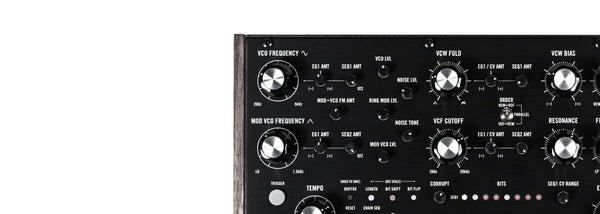
The Moog Messenger features the Moog ladder filter with resonance bass compensation, multiple filter slopes, and true multimode functionality. Its two oscillators include wave folding, and the synth offers dual looping ADSR envelopes for detailed modulation control. The filter can handle everything from smooth, warm bass tones to aggressive, self-oscillating leads, making it a versatile option for exploring filter concepts in a modern analog synth.
The Sequential Prophet-6 Desktop Module uses a classic low-pass filter design with discrete VCF circuitry. The analog signal path delivers the rich, warm tones Sequential is known for, and the filter responds beautifully to modulation. The module includes a poly chain feature so you can connect two Prophet-6 units for expanded polyphony. If you're looking for a professional-grade analog filter in a compact package, this module is a strong choice.
Explore Mentioned Brands


FAQ
What is the difference between a low-pass and high-pass filter?
A low-pass filter lets low frequencies through while cutting the highs. A high-pass filter does the opposite — it lets high frequencies through while cutting the lows. Low-pass filters are used for warm, bass-heavy sounds. High-pass filters are used to thin out a sound or remove low-end clutter.
What does resonance do on a synthesizer filter?
Resonance boosts the frequencies right at the cutoff point, creating a sharp peak. This adds edge and character to the sound. If you turn resonance up high enough, the filter will self-oscillate and produce a pure tone at the cutoff frequency. This can be used as a sound design tool.
What is a multimode filter?
A multimode filter can switch between different filter types — usually low-pass, high-pass, band-pass, and sometimes notch. This gives you more flexibility in shaping your sound without needing multiple filter circuits. Many modern synths include multimode filters as a standard feature.
Why are Moog filters so popular?
Moog filters, especially the ladder filter design, are known for their warm, musical character and smooth resonance. They handle self-oscillation well and have a thick, creamy sound that's become a hallmark of analog synthesis. The Moog filter is one of the most imitated designs in synthesizer history.


