














How to Organize and Manage Studio Cables

Your studio doesn't need to look like a server room, but it also shouldn't look like a bird's nest. Good cable management isn't about aesthetics — it's about signal integrity, troubleshooting speed, and not accidentally unplugging your interface mid-session. If you've ever traced a cable for ten minutes only to find it wasn't even connected, you already know why this matters.
This guide walks through practical cable management strategies for home and project studios. You'll learn how to route, label, and maintain cables so your setup stays functional and your signal stays clean.
Why Cable Management Matters
Messy cables create three real problems. First, tangled cables put physical stress on connectors. A cable draped over a desk edge or kinked behind a rack wears out faster. Second, unorganized routing makes troubleshooting harder. When something stops working, you need to trace the signal path quickly. Third, poor cable separation can introduce noise. Running unbalanced instrument cables parallel to power cables for long distances invites hum.
A well-organized studio saves time. You know where every cable goes. You can swap a patch in seconds. You don't waste session time hunting for the right XLR or untangling a rat's nest behind your desk.
Understanding Cable Types
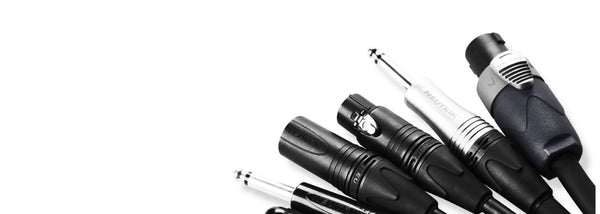
Different cable types serve different purposes in your studio. XLR cables with three-pin connectors carry balanced microphone signals. These are what you use to connect microphones to preamps or interfaces. The Digiflex HXX-3 and NXX-1 are both XLR microphone cables — the difference lies in connector quality and internal construction, not the cable type itself.
TRS (tip-ring-sleeve) cables also carry balanced signals and are common for line-level connections between outboard gear, interfaces, and monitors. TS (tip-sleeve) cables are unbalanced and typically used for instrument signals — guitar to amp, synth to mixer. The Hosa MBL-110 is a balanced XLR cable designed for general audio applications, making it suitable for microphones or connecting balanced line-level gear.
Modular synthesizers use a different standard entirely. Eurorack patch cables have 3.5mm TS connectors and carry control voltage, audio, or gate signals. The Moog cable set includes five 6-inch cables with these connectors, color-coded from black to white for easy identification. These short cables are specifically designed to keep modular patches tight and organized.
Balanced vs Unbalanced Signals
Balanced cables carry audio on two conductors with opposite polarity. This design rejects interference — any noise picked up along the cable affects both conductors equally and cancels out at the destination. XLR and TRS cables can carry balanced signals. Use balanced cables for microphones, long cable runs, and connections in environments with lots of power cables or lighting equipment.
Unbalanced cables carry audio on a single conductor. They're fine for short runs — guitar to pedalboard, synth to nearby mixer input — but they pick up noise over distance. Keep unbalanced runs under 20 feet when possible. If you need to run an instrument signal across the room, use a DI box to convert it to balanced.
Your studio likely uses both types. Keep them separated when routing. Don't bundle unbalanced instrument cables with power cables. If they must cross, do it at a 90-degree angle to minimize interference.
Cable Routing Strategies
Start by mapping your signal flow. Audio moves from sources (mics, instruments, synths) to destinations (interface, mixer, monitors). Plan your cable routes before you plug anything in. The shortest path isn't always the best — sometimes a longer route along a wall or under a desk keeps cables out of the way and easier to trace.
Use cable trays or raceways for permanent installations. A simple wire basket under your desk keeps cables off the floor and away from feet. For desktop setups, adhesive cable clips along the back edge of the desk create clean runs. Leave some slack at each end — tight cables put stress on connectors and make it harder to move gear.
Group cables by function. Run all your mic cables together. Keep instrument cables separate from speaker cables. This makes troubleshooting faster and reduces the chance of accidentally unplugging the wrong thing. Use different colored cables for different signal types if your budget allows it.
Labeling and Identification
Label both ends of every cable. Use a label maker or write on masking tape with a marker. Include the source and destination: "Kick Mic → Ch 1" or "Keys L → Interface 3". This takes ten minutes upfront and saves hours over the life of your studio.
Color-coding works well for setups where you patch and repatch frequently. The Moog Eurorack cable set uses grayscale coding from black to white across five cables. This simple visual system helps you trace patches quickly without reading labels. Apply the same principle to other parts of your studio — use one color for mic cables, another for instrument cables, another for insert sends and returns.
For permanent installations, create a cable map. Take a photo of your setup or draw a simple diagram showing what connects where. Store it digitally so you can reference it when something breaks or you need to modify your routing.
Cable Length and Coiling
Use the right length for each connection. A 25-foot cable between two devices sitting three feet apart creates unnecessary clutter. Buy cables in multiple lengths — 3, 6, 10, and 25 feet covers most studio scenarios. The Digiflex HXX-3 at 3 feet works well for desktop connections. The Hosa MBL-110 at 10 feet handles cross-room runs in smaller studios. For modular setups, the 6-inch Moog cables keep patches compact without excess cable drooping across your case.
Coil cables properly when storing them. The over-under technique prevents twists and extends cable life. Hold the cable in one hand and make a loop. For the next loop, flip your wrist to create a reverse twist. Alternate between over and under. This creates a coil that lies flat and unrolls without tangling.
Don't wrap cables around your elbow or in tight circles. This stresses the conductors and can damage the shielding. For permanent installations, use velcro cable ties instead of zip ties. Velcro is reusable and doesn't pinch the cable. Zip ties can compress the cable and damage the internal wires if overtightened.
Power vs Audio Separation
Keep power cables away from audio cables. AC power generates electromagnetic fields that unbalanced audio cables can pick up as hum. If power and audio cables must cross, make them cross at right angles rather than running parallel. The longer two cables run parallel, the more opportunity for interference.
Use power conditioners or separate circuits for sensitive gear. If you're running a lot of equipment, consider having an electrician install dedicated studio circuits. This reduces ground loop issues and gives you cleaner power. At minimum, plug all your audio gear into the same power strip to ensure a common ground reference.
Some studios use cable raceways with separate channels for power and audio. This keeps everything organized while maintaining physical separation. If you're building out a permanent studio space, plan your power and audio routing at the same time.
Modular and Eurorack Considerations
Modular setups present unique cable management challenges. Patches change frequently, so permanent routing doesn't work. Focus on keeping cables short and organized by function. The Moog cable set provides exactly this — five 6-inch patch cables with 3.5mm TS connectors, color-coded in grayscale from black to white. Short cables like these keep your case front panel clear and make it easier to trace signal flow.
Vertical cable routing works well for Eurorack. Route cables up from the bottom row, then across to the destination. This keeps the front panel relatively clear and makes it easier to see what's patched where. Avoid draping cables across the entire case — it's harder to trace the signal and easier to accidentally unplug something.
Store unused patch cables in a small box or bag near your case. Don't leave them plugged into unused jacks — this can introduce noise and makes it harder to see your active patches. When you finish a session, document your patch with a photo or notes before tearing it down.
Connector Quality and Durability
Connector quality directly affects cable reliability. The Digiflex HXX-3 uses REAN connectors with gold-plated contacts. REAN is a reliable mid-tier connector brand that resists corrosion and maintains good contact over time. The step up to the NXX-1 brings Neutrik connectors — widely considered the professional standard for XLR connections. Neutrik housings are more robust and the internal contact design provides better grip and lower resistance.
Gold plating on contacts isn't marketing hype. It prevents oxidation, which degrades signal quality over time. In humid environments or studios that don't get regular use, oxidation can create intermittent connections or crackling. Gold-plated contacts maintain clean signal transmission longer.
The internal cable construction matters too. The NXX-1 uses a 24 AWG twisted pair design with better shielding than the HXX-3. This provides superior noise rejection for long cable runs or electrically noisy environments. For short desktop connections, the difference is minimal. For 25-foot runs across a room with power cables nearby, better shielding prevents hum.
Maintenance and Troubleshooting
Inspect cables regularly. Check connectors for bent pins, loose housings, or oxidation. Test cables with a cable tester or by swapping them when you hear crackling or intermittent signal. A failing cable can sound like a broken preamp or interface — always rule out the cable first.
Clean connectors with contact cleaner once or twice a year. Dust and oxidation build up over time, especially in humid environments. Spray a small amount of contact cleaner on a cloth and wipe the connector pins. Don't spray directly into the connector — excess cleaner can damage internal components.
When troubleshooting signal issues, work methodically. Start at the source and move toward the destination. Swap cables one at a time. Check connections at both ends. If moving a cable makes the problem appear or disappear, the cable is likely failing. Replace it before it fails completely during a session.
Our Recommendations
These cables represent different tiers and use cases for studio cable management. The Digiflex options cover microphone connectivity with varying levels of build quality, while the Hosa cable offers a budget-friendly balanced option for general audio use. The Moog Eurorack cables address the specific needs of modular synthesis patching.


The Digiflex HXX-3 is a 3-foot XLR microphone cable with REAN connectors and gold-plated contacts. It's ideal for desktop setups where you need to connect nearby microphones or balanced line-level gear without excess cable. The step up to the NXX-1 brings Neutrik connectors and a 24 AWG twisted pair design — better shielding and lower noise for critical connections or longer runs.
The Hosa MBL-110 offers a 10-foot balanced XLR cable at an accessible price point. It's a practical choice for connecting microphones or running balanced signals across a small room. For modular users, the Moog cable set provides five 6-inch cables with 3.5mm TS connectors, color-coded from black to white. These short cables keep Eurorack patches tight and organized, making it easier to trace signal flow without cable clutter obscuring your modules.
Explore Mentioned Brands


FAQ
How often should I replace studio cables?
Replace cables when they fail or show physical damage. Well-maintained cables can last years. Inspect connectors every few months for bent pins or loose housings. If a cable develops intermittent signal or crackling, replace it immediately. Preventive replacement isn't necessary — cables don't degrade on a schedule.
Do expensive cables sound better than cheap ones?
Build quality matters more than price. A well-constructed cable with proper shielding and solid connectors outperforms a poorly made cable regardless of cost. For balanced connections, the difference between mid-tier and premium cables is minimal in typical studio environments. Spend money on good connectors and proper shielding, not marketing claims.
Should I use cable ties or velcro straps?
Use velcro straps. They're reusable and won't damage cables when you need to add or remove a connection. Zip ties can compress cables if overtightened, damaging the internal conductors. Velcro also makes it easier to modify your routing as your studio evolves.
How do I prevent ground loop hum?
Plug all audio gear into the same power strip to ensure a common ground reference. Use balanced cables for long runs. If hum persists, try lifting the ground on one device using a ground lift adapter — but only on non-safety-critical equipment. Some interfaces and DI boxes have ground lift switches built in.


