
















Understanding BPM and Key Matching for DJs

What Is BPM and Why Does It Matter?
BPM stands for beats per minute. It measures the tempo of a track — how fast or slow the music moves. A house track might sit at 128 BPM. Hip-hop often lives between 80 and 100 BPM. Drum and bass pushes past 170 BPM.
For DJs, BPM is the foundation of beatmatching. When you mix two tracks together, their tempos need to align. If one track is playing at 120 BPM and the other at 130 BPM, the beats will clash. Your mix falls apart. Modern DJ software displays BPM automatically, but understanding how tempo works helps you choose tracks that flow together naturally.
You can adjust BPM using pitch controls on your DJ controller or software. Speeding up or slowing down a track by a few BPM usually sounds fine. Push it too far and the track starts to sound unnatural — vocals pitch up or down, drums lose their punch. Most DJs stay within a 6% pitch range when beatmatching.
What Is Key Matching?
Key matching (also called harmonic mixing) means mixing tracks that are in compatible musical keys. Every song has a key — the tonal center that defines which notes sound good together. When you mix two tracks in compatible keys, the melodies and basslines blend smoothly. When keys clash, your mix sounds dissonant and off.
DJ software uses the Camelot Wheel system to simplify key matching. Each key gets a number (1 through 12) and a letter (A or B). Tracks with the same number are in related keys. Tracks with adjacent numbers also work well together. A track in 8A will mix cleanly with other 8A tracks, or with 7A, 9A, and 8B.
Here's how the Camelot system maps to musical keys:
- A keys are minor keys
- B keys are major keys
- Same number = relative major/minor (8A is A minor, 8B is C major)
- Adjacent numbers = compatible keys (7A to 8A works, 8A to 9A works)
You don't need to know music theory to use this system. Your DJ software analyzes tracks and assigns Camelot codes automatically. You just need to follow the wheel.
How to Match Keys in a DJ Mix
Start by organizing your music library by key. Most DJ software lets you sort tracks by Camelot code or musical key. When you're building a set, look at the key of your current track and choose your next track from compatible keys.
The safest moves on the Camelot Wheel:
- Stay in the same key: Mix 8A with 8A. This always works.
- Move up or down one number: Go from 8A to 9A or 7A. Smooth transitions.
- Switch between A and B with the same number: Jump from 8A to 8B. This moves from minor to major (or vice versa) while staying harmonically related.
You can break these rules. Sometimes a key clash adds tension before a drop. Sometimes the energy of a track matters more than perfect harmonic mixing. But when you're learning, following the wheel gives you clean mixes every time.
Pay attention to the melodic elements in your tracks. A track with a strong vocal or lead synth will expose key clashes more than a percussion-heavy track. If you're mixing two bassline-heavy tracks, key matching becomes critical — bass frequencies clash hard when keys don't align.
Combining BPM and Key Matching
BPM and key work together to define your mixing options. You need both to align for a seamless transition. A track might be in the perfect key, but if the BPM is 20 beats off, you'll struggle to make it work without heavy pitch adjustment.
When you pitch a track up or down to match BPM, you also shift its key. Pitch a track up by 6% and the key shifts up by one semitone. Pitch it down by 6% and the key drops one semitone. This can break your harmonic mixing if you're not careful.
Most modern DJ software includes keylock (also called master tempo). This feature adjusts BPM without changing the key. You can speed up or slow down a track and keep it in its original key. This makes harmonic mixing much easier, especially when you're working with tracks at different tempos.
Here's a practical workflow:
- Filter your library by a BPM range that fits your set (say, 120-128 BPM for house music)
- Within that range, sort by key
- Build a playlist using the Camelot Wheel to move between compatible keys
- Use keylock when you need to adjust BPM without shifting the key
When to Ignore the Rules
BPM and key matching are tools, not laws. Some of the best DJ sets break these rules intentionally. A sudden tempo shift can wake up a dance floor. A key clash can create tension before a big moment.
Genre matters too. Techno DJs often mix tracks with minimal melodic content — BPM matters more than key. Hip-hop DJs frequently mix tracks at wildly different BPMs using quick cuts rather than long blends. Open-format DJs jump between genres, which means jumping between BPM ranges and keys constantly.
If you're playing tracks with short intros and outros, you might only have 8 or 16 bars to blend. In that case, a key clash might not even register before you've completed the transition. But if you're doing a long, layered mix with both tracks playing together for 32 bars, key matching becomes essential.
Trust your ears. If two tracks sound good together, play them together. The Camelot Wheel is a guide, not a rulebook.
Our Recommendations
These controllers give you the tools to practice BPM and key matching, with displays and features that help you visualize what's happening in your mix.


Numark Mixtrack Platinum FX
The Mixtrack Platinum FX puts jog wheel displays front and center, showing you BPM and track position as you mix. These 6-inch capacitive-touch jog wheels with built-in hi-res displays give you visual feedback that helps you understand how tempo adjustments affect the music. The 4-deck layout lets you experiment with layering tracks in different keys, and the 16 performance pads open up creative mixing possibilities. At $379 CAD, this controller gives beginners the tools to learn beatmatching and key matching without overwhelming them with features.
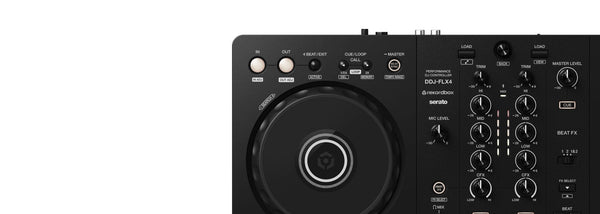
Pioneer DJ DDJ-FLX4
The DDJ-FLX4 works with both rekordbox and Serato DJ, so you can explore how different software handles key detection and BPM analysis. This matters because each platform approaches harmonic mixing slightly differently. The Smart Fader feature automatically adjusts BPM, volume, and bass during transitions, which helps you hear what a proper beatmatch sounds like before you learn to do it manually. Smart CFX adds complex multi-effect combinations with a single knob turn, letting you focus on timing and key relationships rather than effect parameters. The professional mixer layout mirrors Pioneer DJ's club-standard gear, so skills you develop here translate directly to larger setups.
Roland DJ-505
The DJ-505 includes built-in TR drum machines (TR-808, TR-909, TR-606, and TR-707), letting you add rhythmic elements that sync to your track's BPM. This helps you understand how tempo and groove interact, and gives you creative tools to build transitions that go beyond simple blending. You can sequence beats that match the key of your playing track, reinforcing the connection between harmonic and rhythmic mixing. The two-channel, four-deck layout with Serato DJ gives you room to experiment with complex mixes while the TR sequencer adds a live performance element that most controllers lack.
Pioneer DJ DDJ-REV5
The DDJ-REV5 offers Auto BPM Transition, a feature that smoothly adjusts tempo between tracks. This is useful for understanding how BPM shifts affect energy and flow in a set. The large 8.1-inch jog wheels and battle-style layout (with pitch sliders at the top) make it easier to feel the beat as you practice matching. Dedicated Stems control buttons let you isolate vocals, drums, bass, and melody in real time, which helps you hear exactly how different elements interact when keys clash or align. The controller works with both Serato DJ Pro and rekordbox out of the box, and includes Piano Play Mode for melodic experimentation.
Explore Mentioned Brands


FAQ
Do I need to match keys for every transition?
No. Key matching is most important when you're blending two tracks with strong melodic or harmonic content. If you're mixing percussion-heavy tracks or doing quick cuts, key compatibility matters less. Many DJs only focus on key matching during long, layered transitions.
Can I mix tracks at different BPMs?
Yes, but you'll need to adjust the tempo of one or both tracks. Most DJ software lets you pitch tracks up or down to match BPM. You can also use keylock to change tempo without shifting the key. Some genres and mixing styles work better with quick tempo changes rather than long beatmatched blends.
What is keylock and should I use it?
Keylock (or master tempo) adjusts a track's BPM without changing its key. This lets you speed up or slow down a track while keeping it in its original key, which makes harmonic mixing easier. Use it when you need to match BPM but want to preserve key relationships. Some DJs avoid keylock because they prefer the natural pitch shift that comes with tempo changes.
How do I find tracks in the same key?
Most DJ software analyzes your music library and assigns keys automatically. You can sort your library by key or Camelot code to find compatible tracks. Some software also has harmonic mixing features that suggest tracks based on the Camelot Wheel. You can also use music tagging tools to add key information to your files before importing them into your DJ software.


